



PRMT7
PRMT7 is a unique member of the protein arginine methyltransferase (PRMT) family that catalyzes the ω-monomethylation of arginine residues in a substrate-specific manner[1][2][3]. Mechanistically, PRMT7 preferentially targets arginine residues within R-X-R motifs flanked by basic amino acids and exhibits optimal enzymatic activity at lower-than-physiological temperatures, distinguishing it from other PRMT isoforms[1][4]. PRMT7-mediated arginine methylation regulates chromatin structure, RNA splicing, stress response, and cell stemness, thereby influencing gene expression, muscle stem cell physiology, B cell immunity, and neural development[2][3][5][6]. In disease models, PRMT7 deficiency in mice causes defects in muscle satellite cells and immune cell function, while humans with PRMT7 mutations display intellectual disability, hypotonia, and facial dysmorphisms, highlighting its developmental relevance[2][3]. Compared with PRMT5 and PRMT9, PRMT7 exclusively produces monomethylarginine, lacks significant symmetric or asymmetric dimethylation, and shows distinct substrate recognition, particularly for histone H2B and R-X-R motifs[1][4][7]. For experimental applications, selective PRMT7 inhibitors have been developed, enabling modulation of its methyltransferase activity in cellular assays and cancer models, with co-inhibition of PRMT4/5/7 demonstrating synergistic suppression of tumor cell growth[2][6][8]. Collectively, PRMT7 functions as a context-dependent regulator of arginine methylation with implications for epigenetic regulation, RNA processing, and disease modeling[1][2][3][4][6].
Références:
- [1]. Miranda TB, et al. PRMT7 is a member of the protein arginine methyltransferase family with a distinct substrate specificity. J Biol Chem. 2004 May 28;279(22):22902-7. [Content Brief]
- [2]. Jain K, et al. PRMT7 as a unique member of the protein arginine methyltransferase family: A review. Arch Biochem Biophys. 2019 Apr 15;665:36-45. [Content Brief]
- [3]. Hsieh HC, et al. PRMT-7/PRMT7 activates HLH-30/TFEB to guard plasma membrane integrity compromised by bacterial pore-forming toxins. Autophagy. 2024 Jun;20(6):1335-1358. [Content Brief]
- [4]. Zurita-Lopez CI, et al. Human protein arginine methyltransferase 7 (PRMT7) is a type III enzyme forming ω-NG-monomethylated arginine residues. J Biol Chem. 2012 Mar 9;287(11):7859-70. [Content Brief]
- [5]. Wang CD, et al. Developmental expression of three prmt genes in Xenopus. Zool Res. 2019 Mar 18;40(2):102-107. [Content Brief]
- [6]. Li WJ, et al. Profiling PRMT methylome reveals roles of hnRNPA1 arginine methylation in RNA splicing and cell growth. Nat Commun. 2021 Mar 29;12(1):1946. [Content Brief]
- [7]. Rabezanahary H, et al. Live virus neutralizing antibodies against pre and post Omicron strains in food and retail workers in Québec, Canada. Heliyon. 2024 May 21;10(10):e31026. [Content Brief]
- [8]. Feoli A, et al. Identification of a Protein Arginine Methyltransferase 7 (PRMT7)/Protein Arginine Methyltransferase 9 (PRMT9) Inhibitor. J Med Chem. 2023 Oct 12;66(19):13665-13683. [Content Brief]
All Product Categories
-
PRMT7 Produits associés (8)
Produits associés (8)

-
SGC3027
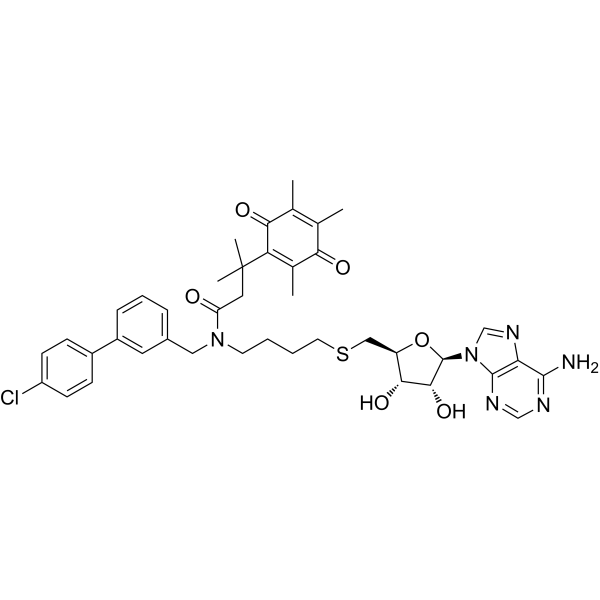 0 ImagesSGC3027 is a histone methyltransferase inhibitor. SGC3027 is the first potent, selective and cell active chemical probe for PRMT7.
-
MS4322
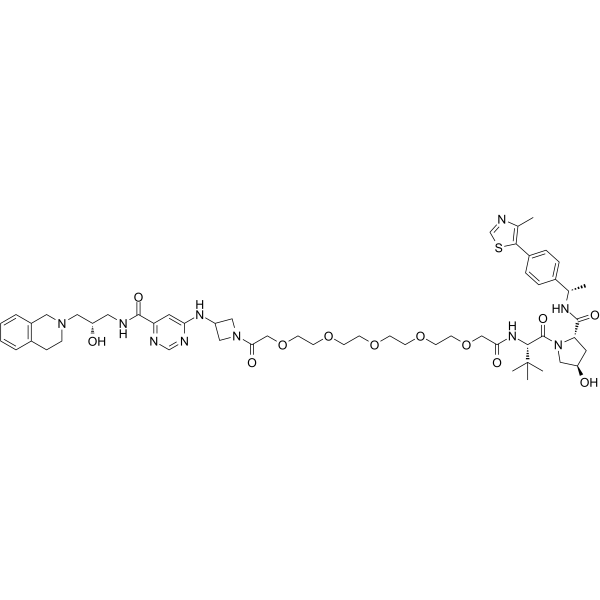 0 ImagesSynonyms: YS43-22MS4322 (YS43-22) is a specific PRMT5 PROTAC degrader. MS4322 reduces the PRMT5 protein level with a DC50 of 1.1 μM in MCF-7 cells. MS4322 inhibits the methyltransferase activity of PRMT5 with an IC50 of 18 nM. MS4322 promotes ubiquitination and degradation of PRMT5. MS4322 can be used for the research of breast cancer, lung cancer, and hepatocellular cancer. (Pink: PRMT5 ligand (HY-173092); Blue: E3 ligase ligand HY-112078); Black: linker (HY-124780); E3+linker (HY-173093 )).
-
DS-437
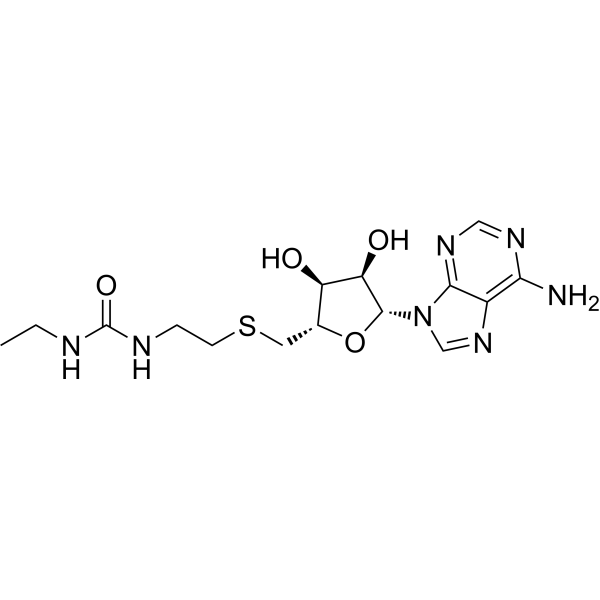 0 ImagesDS-437 is a dual PRMT5/7 inhibitor (IC50s of PRMT5/7=6 μM). DS-437 is selective for PRMT5 and PRMT7 over 29 other human protein-, DNA-, and RNA-methyltransferases. DS-437 is a S-adenosylmethionine (SAM)-competitive inhibitor of PRMT5. DS-437 also inhibits DNMT3A and DNMT3B, with IC50s of 52 and 62 μM, respectively. DS-437 inhibits the methylation of FOXP3.
-
SGC8158
 0 ImagesCat. No.: HY-114211CAS No.: 3062376-84-2SGC8158 is an inhibitor of PRMT7 and can be used to study the cellular function of PRMT7. SGC8158 decreases monomethylarginine levels of Hsp70 (the best characterized PRMT7 substrate). SGC8158 induces growth inhibition in various cancer cells (IC50: 2-9 μM), as well as multidrug-resistant (MDR) cancer cells. SGC8158 also enhances Doxorubicin (HY-15142A) induced DNA damage and Its cytotoxicity.
-
MS4322 (isomer)
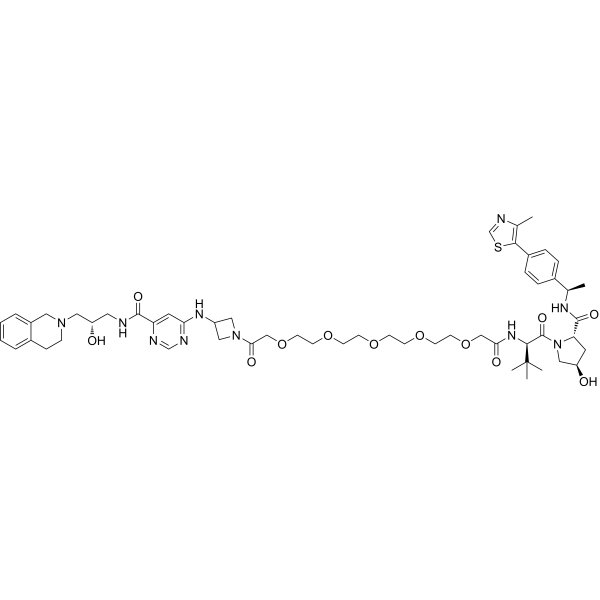 0 ImagesSynonyms: YS43-22 (isomer)MS4322 (YS43-22) isomer is an isomer of MS4322. MS4322 is a specific PRMT5 PROTAC degrader. MS4322 reduces the PRMT5 protein level with a DC50 of 1.1 μM in MCF-7 cells. MS4322 inhibits the methyltransferase activity of PRMT5 with an IC50 of 18 nM. MS4322 promotes ubiquitination and degradation of PRMT5. MS4322 can be used for the research of breast cancer, lung cancer, and hepatocellular cancer.
-
MS2734
 0 ImagesCat. No.: HY-111367CAS No.: 2587612-25-5MS2734 is a dual-substrate NNMT inhibitor that acts as a SAM (HY-B0617) competitor and a non-competitor of Nicotinamide (HY-B0150), with an IC50 of 14 μM and a Kd of 2.7 μM against hNNMT. MS2734 inhibits the methyltransferase activities of DOT1L (IC50 1.3 μM), PRMT7 (IC50 20 μM), BCDIN3D (IC50 40 μM) and SMYD2 (IC50 62 μM). MS2734 is applicable to research related to diabetes, obesity and various cancers.
-
PRMT4-IN-1
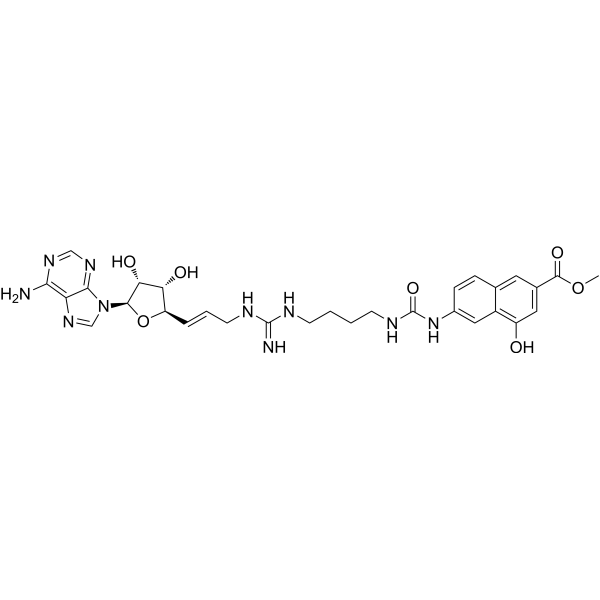 0 ImagesCat. No.: HY-146810CAS No.: 3035425-70-5PRMT4-IN-1 is a selective inhibitor of PRMT4 (IC50=3.2 nM). PRMT4-IN-1 inhibits MCF7 relative viability.
-
PRMT1-IN-3
 0 ImagesCat. No.: HY-175821CAS No.: 892570-48-8PRMT1-IN-3 is a potent protein arginine methyltransferase 1 (PRMT1) inhibitor with an IC50 of 4.11 μM. PRMT1-IN-3 inhibits PRMT6 and PRMT8 with IC50s of 23.3 and 30.1 μM. PRMT1-IN-3 suppresses asymmetric dimethylarginine (ADMA) levels and histone H4R3me2a modification in triple-negative breast cancer (TNBC) cells. PRMT1-IN-3 induces cell cycle arrest, apoptosis, and inhibits migration and colony formation in MDA-MB-231 cells. PRMT1-IN-3 acts as chemotherapeutic sensitizers for Paclitaxel (HY-B0015). PRMT1-IN-3 can be used for the study of TNBC.



